From text-mode.org
By text-mode.org · Process & craft · March 2024
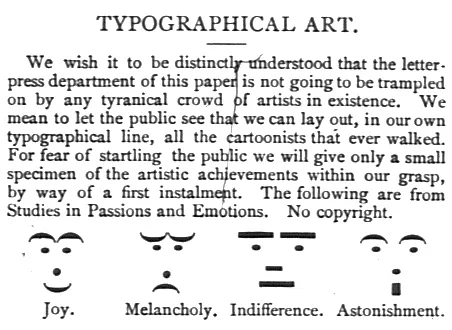
Four moods built from brackets, dashes and periods. Joy, melancholy, indifference and astonishment, made only from typographic marks on a newspaper clipping. It shows an early emoticon idea, long before the emoji. The reproduction is low in resolution, so treat it as history, not as a style guide.
A historic newspaper clipping titled Typographical Art showing four faces made only from typographic marks: joy, melancholy, indifference and astonishment. Each face is assembled from brackets, dashes, periods and parentheses, with only the position of a few marks changing the emotion. The page is a printed text column in serif type. It illustrates how little information is needed to convey an expression, but the print quality is rough and the content is a historical reference more than a usable icon set.
Style: glyph mixed, type-based characters, no strokes, rendered with typographic marks and printed ink, not visible.
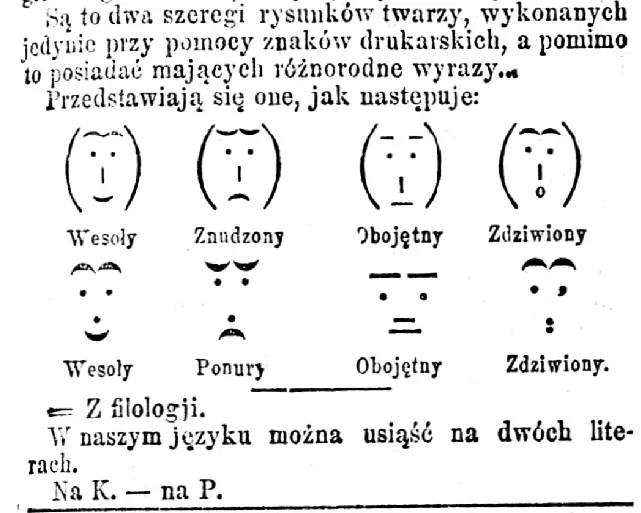
The earliest emoticon from 1881 (left) and its source of inspiration(right) that were published weeks earlier 👀
What works
- Faces made only from typographic sorts such as brackets, dashes and periods show an early emoticon idea
- Each emotion differs by the position of just a few marks
- The historical context helps explain the origin of the icon form
- Ultra low detail keeps the meaning clear
What to watch
- Printed 19th century reproduction with low resolution has limited use as a style reference
- Not a modern icon, so reuse is conceptual
Works best for: design history reference, emoji and emoticon research, typographic experiments.
Featured in Best Icon Projects – March 2024 on the Streamline blog. See the original project.